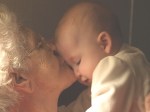
She was a prisoner on the inside and we were prisoners on the outside.

I want to talk about my mother by writing a book. I lost her recently and my way to deal with pain is to write. She was 94 and mortal, so I didn’t expect her to live forever. There is never enough time to do all the things or say all of the things you want to and death seems to focus that reality. Regret, guilt, anger, longing, only some of the feelings to bear with grief. But to write a book about it in a way that helps others channels the emotions into a positive light.

I write for many reasons. In this time of grief, I also want to help others. My mother was in a nursing home and during that time she contracted COVID-19 from a worker. It was difficult enough that they closed the facility to protect the residents two months prior, but then they actually carried it in to her and passed it through a lack of attention to infectious disease protocol. So, I had to start making notes to myself to decide what the purpose will be in writing this book.

I always begin with the same three questions:

Am I writing to entertain?

Am I writing to inspire?

Am I writing to educate?

If the purpose of my writing is an emotional or cathartic release, then it is a diary and is not likely to help or inspire others as much as to help me cope. Although a book can serve all three of the purposes listed, one usually stands out as the primary purpose. In my case, I feel that I need to educate by offering a map of transition from home to nursing home and help others understand what happens after those decisions are made. The next questions I ask relate to the expected outcome. I ask myself the following:

What outcome do I hope for the finished product and who might this book serve?

Is this book going to instruct someone on how to navigate a similar circumstance or problem?

Is this a platform for change?

Once I have answered all of these questions, I am able to identify the type of book I want to write. The next question is imperative to understanding my mindset at the time of the writing.

What essential question do I want answered or what is my strongest desire to fulfill in writing this book?

In order to really stay focused on writing, I have to be passionate about the cause or the purpose for writing. I try to stay on track and not go off on wild tangents that are fueled by anger or regret in a story, but ultimately it happens. That is why I edit later and do a lot of rewrites. But getting as much down as fast as possible is typically how I roll once my basic outline is set up and beside my computer.

I was a nurse for 30 years and have 15 of those in long term care. I understand the system from both sides. I understand the nurses mindset and how they cope with low staffing and not enough time in the day to do all that has to be done. I understand the endless charting to cover your butt from lawsuits and the state and federal laws related to long term care facilities. I was an administrative nurse acting as a DON at an assisted living facility for two years and met with state reviewers during annual reviews. As a family member with medical training, I witnessed poor care, substandard PPE use and lack of professionalism during care of my mother when I was visiting. I understand the feeling from the point of view of a family member with no control and limited information of how my mother was treated day to day. in my absence. I visited, helped with what I could, and walked away hoping they would care for her but knew it would not be with the same detailed care I could give.

That is how I begin. I am beginning a book about my mother. I will probably write two. One will be to help others to navigate the maze of long term health care for the aging, and the other will be about who mom was before she was seen as an old lady. Understanding the difference in these books and separating the two by purpose is important so the audience is not trying to navigate an unclear trip through a grieving brain of a motherless daughter.

Leave a comment

Filed under Aging, Inspiration, On Writing, Uncategorized

The Nursing Home Dilemma

You never want to face the day of placing a loved one into a long term care facility. It makes you feel like you are sentencing them to a slow and boring death. However, there is a time when you can do no more for them yourself, or your parent or loved one cannot care for themselves safely. That was what happened to my family as my mom entered her eighties.

At the age of eighty-eight, mom was no longer able to get around as well, and we were doing the outside work and maintenance to her ranch home. She was still doing what little shopping needed for food and clothing. She was still able to pay her bills and keep her checkbook, but it was time for a change. I was the one who suggested a senior community knowing things were changing.

There were four of us kids, spread out over twelve years of age from the oldest to the youngest. I was the youngest and my daughter and I had been sharing a home with mom for ten years. We had seen her through a hip replacement, a broken leg, and several hospitalizations for ailments. My daughter had left for college now, and I had met a man who would later become my husband. The opportunity had come to move to Texas with this man but it would mean leaving mom to be assisted by my family still in Indiana. Because of this move, mom thought it was time to sell the big house we lived in. She was a realist and that was a blessing. She looked at retirement communities and we agreed on a senior apartment complex with a shared dining and common areas. The move happened quickly and I was in Texas a month later.

It went well for her for three years with me in Texas and the rest of my family in Indiana. She had a small apartment but privacy and could come and go as she pleased. She began falling, and then she took too many of her medications in one day. She was hospitalized, and later found to have a failing heart and kidney failure. She needed heart surgery at 91 years old. It was a risk, but if not done, she would not live long. I came back to take care of her for three weeks after she came out of heart surgery like the strong woman she was.

Strong or not, she was getting older and an assisted living facility was the next big move to assure her medications were controlled and her finances were monitored by my sister since she had a habit of sending money to every cause that called on the phone. I went back to Texas for a year before moving back to Indiana for good. Mom’s vision was slipping away due to glaucoma and she was labeled as having mild Dementia related to age, heart, and kidney disease. She was forgetting what happened yesterday, the day before, and some of the months were running together. She had covered her forgetfulness for several years from what we saw on her finances and closets full of overbuying things she had already purchased only days before at a forgotten grocery store trip.

These were only a few of many signs of rapid decline in my mother’s ability to care for herself that we saw. She could still carry on a conversation, sounding as intelligent as she had always been and covering her forgetfulness blaming age and being tired. For the most part, it was working for her until her health decline made us aware of her ways of hiding things. On top of facing our changing roles between child and parent, we had to become the advocate for her minimum standard of care in the aging long term facility model in the United States.

Long term care should be labeled, “Death by discard”. It may sound harsh, but often elders are left in these homes for the old with few visits by family. It gave me an extreme amount of guilt and depression by committing her to live in a facility because I knew the visits from family would be few. By “few” I mean, once a week for an hour on Sunday afternoon with grandkids in tow kind of “hi Mom-love ya” visits.

I am not dismissing that I did the same type of quick visits while living my life, working, paying bills, and caring for my kids. It’s easy to forget to call mom every day and to make a point to stop in every couple of days just to check up on her. Soon I started to see healthcare from a different perspective. I had lived as a nurse for 30 years with 16 being in long term care. I made excuses of knowing how understaffed facilities were and that it would not change. I tried to take on some of the burden of meeting mom’s needs until I saw an ever narrowing gap between a minimum standard of care teetering on the precipice of neglect. I knew what should be done, what was not being done, and recognized lack of training and care when I saw it because in my day in a facility I was one of those tyrannical nurses that CNAs hated working with. I was demanding to make sure residents received above standard care. I dealt with a lot of families but none ever accused me of not caring for my patients.

I was still hesitant in becoming “that daughter or son” in my mom’s facility. The one was the kid I dreaded dealing with when I was working long term care. The one who came in once a week and thought she knew everything that should be done and how. The one that complains all the time and doesn’t see mom’s confused days and bad days and is on her best behavior on the days of a visit. I get it.

I did become the one. I saw dirty toilets, unchanged linens, trash overflowing, and lack of staff. I heard excuses of trying to meet the needs of so many with so few. I was the one who was not notified when mom fell and I saw her three days later with massive bruising on her right side with dried bandaids over a skin tear which would retear when the bandaid was finally changed. I was the one who worried at night in my bed if she was falling or messing her bed with no one to help because the night shift was short. My parent had become as much a worry for me as I was for her when roles were reversed and I was the sick child in the care of someone else.

As we have moved into the future, my mom is 94 and now in Hospice care. The last three weeks feels more like a year with mismanaged care, agency nurses covering a failing assisted living facility and Covid 19 infection outbreak that has pushed my mom’s health over the precipice. She regains to a coherent state for minutes a day instead of hours, overshadowed by confusion, fear, and a moaning ache of age and discomfort as her days dwindle. My role as her advocate for respectful care has become as a lion over a cub. While others dismiss that she has lived a good life, and some justify that she should be drugged to keep her stoic and safe, I continue to fight for her right to be monitored, respected, and loved for where she is in life and not push her off the cliff to make room for the next one.

This small shriveled woman sleeping her days away is the same woman who sat up nights holding washrags to her kids fevered heads. This is the woman who picks up the falling toddler. She is the woman who hangs sad silly pictures of nondescript animals on our refrigerator and always has a warm meal and seat for a stranger. She is the brunt of dad’s stupid jokes and our pranks. She is the patience blocking dad’s anger and our butts on a bad day. She is the magician who makes a meal for six stretch to eight when dad brings home guests. This is the healer who had endless bottles of mercurochrome and Bactine covered with bandaids. This is the gardener who canned enough food to last all winter from her hard tended garden. This is the dark figure sewing pajamas at 2 am the day before she made Christmas dinner for 35 people by herself. This is the chauffeur, PTA member, seamstress for school plays, church social participant, kleenex holder and carrier of the mom purse of wonders. Her very existence is my inheritance and making a caregiver see that vision of what she has been and what she is to us is hard when they view her now, shriveled up and quiet.

While you never want to face the dilemma of long term care and being a parent to a parent, it may come. If that day comes, never take a backseat. Be that one kid. Be your parents advocate for care and respect. As the roles change, know that you will be in her place some day and pray you will have the same grace of someone loving you so hard that they are the one.

If you are considering long term care for yourself or a loved one, check back on my blog next year. I am working on a book to help families transition and navigate this journey.

Leave a comment

Filed under Aging, Inspiration

Aging Without Grace

There is nothing graceful about getting old. One day you awaken to sore joints after a day of exercise that twenty years before was relieved with a good night’s sleep. Suddenly, everything hurts from your head to your toes. You notice that certain foods now cause indigestion or end up making you feel bloated. Your balance is questionable as you fall over invisible bumps in the floor. You go into rooms and don’t remember why. You forget where you park and roam around parking lots pushing the warning beeper waiting for a car to talk to you. You wear two different socks and don’t care. Clothing choices are based on comfort more than style or fad. You drive with a purpose and realize you are a day to early or late to the appointment. You get tired and get ready for bed before the sun goes down. You become less spontaneous and more predictable. Your eyes, ears, waistline, and height change but not for the better. You stop looking in the mirror and avoid getting your picture taken. Going to the doctor more is a given. Suddenly, vitamins seem like a necessity instead of a good idea. These signs of age related changes do not hit any one person at the same age, but inside your skin, you know and try to avoid the obvious. I am getting old.

When you recognize this fact, you start avoiding some activities because it creates an unwanted result the next day. I no longer stay out in the sun all day. I no longer plan a trip without taking a pharmacy along. I no longer stay out after ten at night when I have to work the next day. These are just things that eventually create such a difficulty functioning the day after that it is not worth the effort. I am getting tired.

The next phase of aging comes when your parents or other family begin to get old, sick, and die. This awakening to your own mortality hits hard. Watching people you love begin losing their memories, misplacing things, forgetting dates, and driving dangerously is a frustrating decent into becoming a parent to your parents or guardian to your guardians. I am weighed down by my responsibilities.

For many of us, the path to your parents slow roll toward dependence upon their children for care is slow. For some, that total dependence upon children for care is sudden through stroke, heart failure, muscle disorders, or one of multiple forms of dementia. The sudden forced role change can be unhinging to your life and to your mental state. The path is varied but all have the commonality of forced role change between the parent and the child. Who will take care of me some day?

Aging gracefully is a pleasant fairy tale. Aging is more like an endless roller-coaster with changing tracks somewhat like a Twilight Zone version of the It’s A Small World ride at DisneyLand. The only way to deal with it is to find humor, enjoy the small joys of breathing, and face each day as it comes. Worry and frustration does not change your current state, but your attitude can make it more bearable for those around you. Aging sucks, but I am not ready for the alternative yet!

Leave a comment

Filed under Aging

Buttons

Today I was sewing mask ear savers for nurse friends who wear masks in this era of the Covid-19 virus. A friend donated a bag of buttons to me to use. I dumped the bag and started sorting. It rushed me back to my childhood.

My mother and grandmother both made their own clothes, and over the years I had pajamas, suits, Easter dresses, and even my prom and wedding dress sewn by my mother. Buttons in boxes and jars were all over the my grandmother’s house. She had a tin box filled with old buttons from the 1930s, 40s, 50s, and they made a delightful noise when the box was shaken. When I visited, I dumped them out on the kitchen table and sorted, stacked, and made button necklaces with thread. Hours and hours of fun because her buttons were strange. They were glass, crystal, jeweled, metal, painted, plastic, wood, and some were just huge. I would ask her often what each one was from. Most of the time, she answered exactly what she cut it off of or if it was from customer alterations, or gifted. She used to starch shirts and do alterations for money as well as making clothes. Sometimes people just gave her buttons if they had them lying around since she did alterations and replaced buttons for people on coats and shirts.

I sat at the table, or on her wood floor, separating buttons by color, size, or category in my head. They were not just connectors for clothes, they were a living thing to me. They told me a story. Fancy dress buttons were worn by ladies going to a ball and dressed in satin, lace, and button up gloves. The gentleman behind the brass button in the box lost the button from his jacket when he was getting up to pull a chair out for the lady. My imagination always led me to connect things with people who held them once.

Now as I sit and sort, I smile at the memories of a seven year old self on the floor with a pile of unwanted buttons.


1 Comment

Filed under The Past, Uncategorized

Editors, Proofreaders and Ghostwriters

There are distinct differences between editors, proofreaders, and a ghostwriters. There are different types of editors and ghostwriters, dependent upon their employment. If they are contracted at a professional journal, newspaper or publishing house, they are often paid more and have more limitations than a freelance professional. Proofreaders review work for grammar, punctuation, and simple formatting or spacing errors. Ghostwriters are paid to produce work and not take the credit for writing. Copy editors review the entire work and offer contextual direction and advise on revisions.

Early in my career, I contracted with a client who hired me as a copy editor for her intended self-published book. She was developing a coffee table book about her pet. She had beautiful photographs and a basic text already laid out. I partnered with a layout editor and we packaged a deal with this client to help her develop the work into a finished book ready to publish. Over the course of the next few weeks meetings, she was disappointed with me as an editor and states she didn’t know why she needed me because I didn’t “fix” anything for her but made her do it. Needless to say, she did not understand my role in her work and I should have outlined the roles of the copy editor and layout editor much more clearly. She wanted someone to reword, correct all contextual errors, and do the revisions, or as she described, “say what I really mean.What she really wanted was a ghostwriter.

When hiring a professional ghost writer, be prepared for several interviews in person, by phone or email with the writer, and expect that person may have to view pictures or personal information in order to create a finished work. Also know that they will not be able to duplicate your voice on paper and may not “sound” like you. This is part of the cost for hiring someone to tell your story. Your are hiring their professionalism and writing skills to share your personal story, but they will not likely be able to produce your personality on paper. If you can write the story but need help with the organization of it, that would involve a copy editor.

As a copy editor, my job was to analyze the work, suggest revision of language and organization, advise on errors in syntax, context or style, and offer direction on how the author can improve the text, design and presentation of the work in total. She often received responses by email from me stating something like, “consider revising this section to reflect a description of your witnessing this act and how it effected you personally.”  I also pointed out any grammar, punctuation, or mispelling errors [without correcting] that a proofreader might do. She sent her work in pieces over a few weeks, then she inserted text into the photography and we reviewed the layout format and design as a group.

The layout editor did the design and formatting of the photographs with the text and delivered the work in PDF format ready for publishing. This editor also set up the physical publishing of the book with the printer. Her paid bill to us was around $800, which was substantially less than a professional copy editor and layout editor charge at a  professional print on demand publishing house. Her cost to print books was going to be several thousand dollars for the high quality color gloss pages she desired. In the end, the client backed out of publishing when she found out the cost of print was over and above the cost of our contract, even though clearly spelled out to her in our first meeting. It was a misunderstanding of the roles and services covered in the contract. Although discussed in a meeting, these roles were not defined clearly enough in the service contract.

When hiring one of these professionals, ask them about the scope of their role in your work. If they do not answer appropriately, or cannot define one of these roles, do not hire them. Investigate the professional you hire, ask for and check references, and pay no more than half up front, and the other half on completion of the service. Make smart decisions about your work and do not sign a contract with any editing service if roles and responsibilities are not clearly defined.

Leave a comment

Filed under Uncategorized

Writing Practice

Every day that you write in your journal, comment on someone’s work, or post on Facebook, you are practicing the art of writing. But what are you practicing? Are you developing reasonably intellectual arguments or comments, or describing a picture of a cat as cute and fluffy?

The practice of creative writing requires some dedication to consistency. Like any talent, if you do not practice regularly, your work will not be as sharp and lack focus. This does not mean that a practiced writer will not make mistakes. On the contrary, I edit my work several times before allowing it to leave my possession.

I recently offered a first draft to a colleague who agreed to review my work for content. I know she will end up doing line by line editing because she was an instructor for so many years.  I write daily, but I found four mistakes of syntax and punctuation on page one of my draft after viewing the printed copy. I should have reviewed the work more closely before showing it to my mentor.

Printing out your work and reviewing it offers a different perspective from seeing it on line or on the computer screen. Perspective in writing can be expanded by trying on different genres and styles of writing. Switching from fiction to non-fiction, from journalistic style to fan-fiction, or from business format to poetry can give any writer a creative boost.

Creativity and inspiration is important in the practice and production of good writing. Look for inspiration anyplace you spend time. If that is on line, in a library, or sitting at a concert with friends, then find your motivation there. Practice writing every day and you may be signing your autograph for a fan inside the cover of your next book. You will not find success if you don’t try through applied practice.

Leave a comment

Filed under On Writing, Uncategorized

Ideas for writing

I have never had a problem finding lots of story ideas. Writing stories started with my love of books in elementary school and going to the local library on Saturday morning. I loved stories of characters in an adventure like Curious George and Madeline. I wrote little stories on notebook paper in my room and read them to my mom and dad while they tried to watch the evening news. I have always had an active dream life and wrote many of those dreams down in my journal.

Journaling sparks ideas for stories later. When I write about my day, people I know, or things that happened to me at the store, it often results in an idea. Traits displayed by strangers in stores I visit often end up in my stories.

Stories are just a mirror of every day life with a little adventure and mystery added for entertainment sake. Simple errands on a Saturday can take a turn with a flat tire or a lost cell phone. Expand on those little complications, add more complications, a villain, a hero, or a big environmental event and you have a story, or a book.

When my story is dead, or I cannot think of ways to bring an idea into a full story, I do some exercises in writing.

Exercises for Ideas:

  1. Look at old pictures and ask “What if my Aunt Sally had not finished her final vows as a nun and instead had been jailed for a crime she didn’t commit in 1941?”
  2. Read a classic novel, take out the main character and change their motivation to something sinister in the book. Can you create a whole new story?
  3. Watch a movie. Write a paragraph of a scene from the movie, changing the gender or species of the main character.  How did the story change?
  4. Go to a mall, coffee shop, or café and sit down with your computer. Listen to every conversation around you and secretly type out three sentences you hear. Make one of them the opening line of your story. Develop a story from there.
  5. Make your fantasy come true. Did you wish to be born in a different era or follow a different career path? What if you had followed your childhood dream and become a ballerina, a fireman, or a congresswoman? Make yourself the character in a one page description of that life.

The ideas or imagination were never any problem for me. My problem has always been weeding through many pages of ideas to find the one that could become a short story or a book. These are just a few suggestions to help you on the way to your next big idea for a story.


Leave a comment

Filed under Inspiration, On Writing

It’s never to late to learn

At the age of 40, I returned to college to get my Bachelor’s Degree in Liberal Arts, or English Literature to be exact. While that may seem to many people like a study that has no real purpose, I quickly point out that it is a difficult major. Just as science, math, and business, an English Literature degree requires a great deal of study and dedication to acquire.  As a student of this particular subject I had to learn to read differently. I learned not just to read a story for entertainment, but to identify deeper meanings within the words.

As an artist uses different hews of the same color to create shadows, a skilled writer will use words within phrases to create double meanings. Symbolism, archetypes, metaphors, similes, these are just a few of the first things that I learned as I read the classical masters.

My favorite author in literature quickly became Nathaniel Hawthorne. He had a way to weave a story so deeply in my mind that I could not leave it with the last word on the page. I lived his characters over and over in my mind for days after having finished the story. And even though I had been writing stories myself, including publishing a novel, I had never dissected any story and looked at it back to front as I did in my literature studies during college.

Some friends of mine told me they would rather go to the dentist twice in one day than to read all the books on my required reading list. Actually at times I felt much the same. I dragged through Gertrude Stein with concrete in my shoes as the instructor hailed her majesty as works of art. I learned to appreciate her work, but never really enjoyed any of it. It seemed the more far fetched I “interpreted” her work, the better grades I got. That is not really understanding her work as much as using my seven year old imagination to sprinkle a confetti of possible interpretations over a minimum word count essay. Some of the epic poetry studies bored me to tears, but I survived it. Shakespeare was tortured reading for me because, let’s face it, it’s not written in modern English language, therefore, it reminded me of a foreign language.

There are certainly things about returning to college classes that I hated. I disliked being closer to the age of the moms of the students. I was several times at the beginning of the semester mistaken for a teacher. Then there were the standard required classes of math and language. Math in general made me miserable. If I could have written an essay for math and passed, I would have been in heaven. Letters and numbers don’t belong together and Algebra will forever perplex me.

I barely passed the Spanish classes, and the teacher did so purely out of pity and not wanting me to return the following year into her class. My lips and tongue were not meant to roll the “r” and my old brain leaked information and resisted learning the conjugate the tenses of the Spanish language. I struggled more than any freshman student in class and in the end, the Freshmen were tutoring me just so I could pass.

Overall, I loved this time back in college. Even when I had 12 essays due because I stupidly took five English courses one year. My advisor tried to talk me out of it, but I insisted. I did well. But I spent every moment when not asleep, day and night,  reading and writing.  For me, even with overwhelming work and deadlines, I loved it. I cried when it came to an end. I never enjoyed anything more in my life except for becoming a mom.

No classes I could have taken would have prepared me better for a job requiring analysis and critical thinking than English Literature. I have never had to think so hard in my life. Pulling apart a manuscript and identifying the structure, plot, allegory, metaphors, character archetypes, symbolism, and even style of the authors in general requires a lot of patience and attention to detail. Analyzing a story in pieces can give the reader an entirely different view on the outcome of the story. Learning about the author writing the story can also clue the reader to certain recurrent symbols shown in their stories.

So, when someone makes a remark about my degree and what good is that for preparation in the work place, I just smile.  I developed more patience, dedication, and analytical thinking skills during my years studying English Literature than I ever thought possible. I have used these skills to analyze situations, to recognize people’s skills and potential, prioritize needed actions, and determine possible outcomes that help me meet challenges better prepared. Without a doubt, I would do it all again. At any age, it’s never to late to learn new skills.

Leave a comment

Filed under On Writing

“I lost something…”

Alzheimers is a slow march of identity loss for the sufferer and drawn out departure from your loved one for the family. “I lost something…” he says to me. He is only 76 years old and has a hard time remembering where he is or why he is in a memory care unit. “I need to go home now.” He says.

We try to help him cope, distracting him from the immediate anxiety of his current thoughts. Once in a while he tells us of his occupation, his children, his honors received in a life well lived.  Then he disappears again and looks right through his daughter while she is distraught because he doesn’t know her today.  Tomorrow he not only remembers her name in her absence, but tries to call her and is angry she is not taking him home.  He is confused and some days he tells me just that. “I have Alzheimer’s.” He says. “Yes, I know.” I say.  “It’s why I am here I guess.” He says. “Yes.” I say and smile.

On Friday, the daughter sells his house to help finance his stay in an Alzheimer’s care unit. His new family are similar seniors with different stages of identity loss, health failings and departure from all they knew in their life. Some of these men and women are or were rich, some not so much, and many were successful at jobs, at parenting, or at creating a lasting impression on someone who passed through their days on this earth.  The farmer, the nurse, the engineer, the teacher, the dancer, the mother, the construction worker, the grandmother…they are here. You have met them all in your life.

Waiting with them, helping them and their families try and cope with small events of changing consciousness daily.  Some days are heavy through our hearts all the way through our feet as we try to sooth these unknowing cotton-haired friends.  In all ways unfair to witness or experience, we seek a way to cope with those lost in Alzheimer’s dementia. Keeping them safe, preserving some dignity, offering a witness to their slow disappearance is what I do as a caregiver.


Leave a comment

November 9, 2014 · 3:20 am

My Battles with Depressive Disorder

This is where I have been lately…in my own head. While I struggle to find peace, I am reminded through my own failures at work that whatever I do — I have to do it right to fulfill expectations around me if I am to survive. I have responsibilities to do a job, to keep a house, to care for my pets, to pay my bills, and to make the best out of my circumstances. No matter how unfulfilled or sad you feel inside, on the outside your life continues with others witnessing and mirroring your movements until your time on earth is up. Depression is not just a state of mind. It is a truly debilitating challenge to live life in a socially acceptable manner while battling your inner demons.

It’s never easy to feel you are failing to cope or failing those around you in life and don’t know why. I have a hard time giving myself allowances to make a mistake. I forgive others with ease, but rarely forgive myself for my shortcomings. Everyone tries to help with suggestions like, “maybe you need an antidepressant,” “…meditation helped me,” “I pray every day,” “have you tried acupuncture?” Thanks, and…yes, yes, yes, uh…no.”  Lying on a table while someone punctures my skin with needles is not my idea of relaxation and coping. There is no one magic tool to cope with life. For us with real depression issues, medication only dulls the symptoms but coping is still a daily struggle.

Most people I know with a depressive disorders are sensitive, caring, and somewhat anxious.  It is not that I am unhappy all the time, it is that every emotion I experience outside of happiness is heightened.  Some people have extreme emotional responses to circumstances others cope with readily. I respond much differently to a room crowded with people, a small elevator, to a flat tire, and to other daily stresses of life.  Coping is a problem when you are incredibly sensitive to people and events. I actually can physically feel others pain when they cry and have learned to pull away from people in order to try and keep my composure while caring. Perhaps nursing was my way of controlling my own feeling of sadness by focusing on the more acute needs of others. I had night terrors as a child that kept me awake for hours about people needing help, but I couldn’t help them. I always dream in color, with solid shapes but overwhelming disorienting feeling of uncontrolled momentum through zero gravity space. I rarely awaken rested, and often feel like I have been working insolvable algebra problems all night.  Call it extra-sensory perception or heightened subconsciousness, depressive disorder, or borderline insanity, but any way you slice it, it’s a pain in the butt. Everyone’s struggle with depression is unique to them. I have learned a lot of people in the medical field have a depressive disorder.

Along with this strange individualized depression I struggle with, I have always had premonitions that physically effect me. Now many people who have had deja-vu and dismiss it as just a coincidence know that if something occurs over and over and over, may not just be coincidence. This is where I am at because premonitions that result in real events have happened to me at least a dozen times in my life. Some events were more tragic than others.

The week before my dad died, I started having really bad dreams. The night before he and my mom left on their 53rd anniversary trip, I was awake for several hours with a stomach ache. I had horrible anxiety and fear when I did sleep that night. They had taken the same trip many times and it was never a problem.  Somehow, I had a horrible feeling this trip would be a very bad idea. I visited my dad and mom the night before they left. They seemed fine and ready to leave the next day.  I still was sure this was a really bad idea. The next day at work, I received a phone call from my sister. My sister never called me at the doctor’s office. “It’s dad…oh God…mom’s okay…but dad…he’s dead. It was his heart…” I don’t remember what else she said. I apparently became incoherent and don’t remember my coworkers helping me to the next room where I was sobbing uncontrollably. I don’t remember much about that day.  I do remember my brother crying, calling people. I remember calling my aunt.  I remember my mom looking shocked but coping better than the rest of us. I remember a discussion with my brother that day.

“I knew this would happen.” I said.

“I had a dream last night.” He said.

“So did I” I said.

“Was it about this?” He asked.

“Yes.” I said.

“Did you have a stomach ache too?” He asked.

“I had diarrhea for an hour.” I said.

“Damn.” He said.

“Yeah.” I said as we cried together.

I have always had premonitions. Even as a kid, deja vu happened to me more times than I can count. When I lived in Columbus, Indiana I had a friend who lived across town. We were very close friends since we were 18 years old. Both in our thirties and with kids who played together, we were talking almost daily.  It had been a week since we last spoke. I was taking my daughter to a movie that evening and suddenly had a horrible gut pain. I became absolutely struck with anxiety and thought of Tracy.  I saw her face and I heard her say my name. I started driving to her house. Five minutes later and fifteen minutes from her house I got a call from her husband. She was sick with a high fever and had been vomiting violently for over an hour. She was talking incoherently and he didn’t know what to do. I told him to call an ambulance immediately.  I got to her and she was absolutely confused at what was going on. She was very very sick. The next day she was at a major hospital with an infection on her brain. She survived, but it was touch and go for a while.

This was only one of many many times I had a premonition that resulted in an event surrounding a family or friend. Is it a sixth sense or does it have to do with this depressive disorder? Is it a malfunction of my brain or a gift? Can a gift create both joy and sadness or is it just a matter of perspective? These are all questions I ponder at night when I am not sleeping because I know the dreams are waiting. Because I lie in bed awake until midnight or two am, I don’t really wake up completely until after 10 am daily.  I sometimes don’t even remember driving to work in the morning. I am forgetful and have a poor memory.  Routines and list making help me to function normally rather than just remind me of things not to forget.

What is functioning normally anyway? Doesn’t everyone have days they are depressed? Well, yes everyone does have bad days.  The difference is that a person with a depressive disorder cannot be brought out of their “funk” with happy people or distractions of going out and having fun. A person with depression knows how to mask how they feel well so they can be perceived as “normal” in public. I don’t go out unless I have to go because I generally am exhausted by going out. It’s a lot of work mentally and physically to always appear to others that “life is great” when you don’t feel that way inside. I have days when I am feeling happy, but often in that day, stresses get me down quickly. By the end of the day I am completely exhausted and feel mentally drained. “Exercise, you will feel much better.” I do that, come home, and can still lie down and be awake all night, then the cycle begins again.

When people with depressive disorders are asked by someone in passing, “Hi, how are you today?” We laugh inside and stoically answer the standard, “Oh fine…and you?” while smiling a painted happy face.  What we are screaming inside is…”I want to go home, crawl under my covers and sleep for the next ten years, but other than that…”

As a faithful person, I do find happiness in prayer, reading the bible, and singing along with good southern gospel music. However, truly fulfilled with awe inspiring completion? Nope. I am told by many believers, “You have to submit to Jesus and accept him completely into your life in order to receive fulfillment.” Hmm. I have with all my being tried again and again to be open and thought I was…but apparently, not.  I feel pretty good about my life for a little bit, things go well, then the decent begins. It usually begins with hearing the burdens of others, empathizing with their needs, and doing what I can to offer comfort. Then comes stressors of a bad day, the dreams all night every night for a week, and ends with me balled up in bed after work on Friday, crying uncontrollably.

Finding a happy place is sometimes as allusive as an eight hour peaceful sleep. I make it through today by accepting that..”it is what it is.” Your life is in constant motion and riding the waves without a paddle when you have depression. At least that is my experience with it. I do have days when I feel happy. I have days when I don’t feel much at all and just exist. The days in between are filled with existing and coping with life’s stuff.

I hear the garage door open and rush to the kitchen to begin a fast supper. “How are you today?” My husband asks.

“Oh fine, and you?” I say smiling

1 Comment

Filed under Prose