My Writing Journey

I do not remember a time in my life when I didn’t enjoy writing. Personal journals, story writing, poetry and tutoring, were hobbies when I was not reading or visiting the library. I am happier when I am writing or reading. My professional life for over twenty years had been nursing. Twelve hour days on my feet, caring for patients, their families, eating on the run, and dealing with emergencies or death created my need to escape into books, or writing when I got home at night. I decided to set a goal to write a book. I was no longer happy keeping writing in my pocket. I needed to share my joy of writing. Ninety days later I mailed a query letter to a publisher and one month later I was offered publication. Although it was 180 pages of imperfection, it was also my first goal met in writing for others. It was an eye opening experience because I made a lot of mistakes. I knew I wanted to write more, and write better. At forty, I returned to school to study writing and read great writers. Moreover, I wanted to be guided by professionals in literature. I gave notice at my nursing job and tried to explain that I was quitting to go back to school full time to get my bachelor’s degree in English literature. Many thought I was crazy, and as a single mom, I was terrified but excited.

Very quickly, I realized how inept I was at writing for discourse. I went from writing high school five paragraph essays to a fiction novel. Neither required knowledge of a specific “voice” to my writing. My academic writing skills were non-existent. My professors were supportive and offered their time to help me develop my strengths and overcome my weaknesses in writing. As my skills increased, I was asked to join the student journal and consider becoming a tutor. I worked at the student tutor center about 12 hours per week on campus. I also worked voluntarily about six hours per week editing and proofreading student work for the school journal and for student friends. Through my work at the tutor center I began to realize the gap in writing skills between high school and college. 

I found that new college students rarely understood the techniques of writing for audience and discourse. Their ability to go beyond a four page research essay was limited and frustrating. My professors discussed this issue with me every time I brought it up. How can we fix this? Should it begin at the high school level? This began my desire to help high school students develop their writing skills to make the transition from high school to college writing more effective. 

I started keeping lesson plans before I really knew I would someday teach. I developed class outlines about writing for discourse, writing what the teacher wants to hear, and creating subject specific essays. This was the year [2011] before I opened my business “Traylor Writing Services Center & Bookstore” in Columbus, Indiana.

While I did offer fee based classes, I also volunteered to assist young writers free guidance in story writing. The Columbus Signature Academy brought a class of 15 year old students to my business and we worked together to create self-published children books they wrote using an online platform. One of the students went on to offer her multilingual book to an African church mission [2012].

I have continued on my path of teaching high school by supporting students in the community by tutoring, creating a college scholarship supported by donated funds, and continuing to work on my lesson plans for a pre-college writing class that does not exist…yet. My students at our local high school often send me their writing to review for other classes because I return it to them quickly with edit suggestions. I learned quickly that “contract hours” for teaching is a fantasy. I never worked so many hours unpaid in my life than I have in the last 2 years. I have a hard time saying no to helping kids who genuinely want to succeed. Just a month ago, I spent 4 hours on a zoom meeting with a 7th grader who has a passion to become a writer. We looked at her writing, discussed goals, practices, and the importance of reading in the genre she wants to write. Her enthusiasm was infectious. It was a joy.

Recently [2021], I passed my core subject testing and secondary education testing enabling me to apply for a career specialist permit. The schooling after work took a year to complete at the local community university. Unfortunately, I now have to ask people from my past to help me document professional work and dedication to my subject equaling 4000 hours over the last five years. Realizing that I have not kept track of dates and names of the volunteer hours, nor kept track of those people I have helped, it seems a daunting task. I never thought that I would be required to recount so many dates and names in order to prove to a state licensing system that I am dedicated to my profession. The realization that all I have devoted my time to over the last ten years could be derailed by one person at a desk who does not know me. However, I do not give up, I get up. If I have to do so, I will find another way…until I succeed. 
Leave a comment

Filed under Uncategorized

Easter Memories

The night before Easter morning, mom laid out my outfit for Easter Sunday services. Every year until I was a teenager, she made a dress for me. Usually it was a pink or a robin egg blue satin dress with little daisy flowers hand sewn on. The little cotton white gloves were always there as well, laid neatly next to the dress on the bed. She got out a clean pair of stockings or laced ankle socks, dependent on the weather. There was a soft white sweater with pearl buttons, well worn because it was my favorite. One year she made me a little white drawstring bag to carry my “necessities” of tissues and paper and pencil. The white Mary Jane shoes with a white flower on the top were laid on the floor at the foot of the bed because it was bad luck to put shoes on the bed. The white straw hat was the last thing brought down from the closet, neatly wrapped in reused white tissue paper to keep it dust free. There was a new grosgrain ribbon added with a button or a silk flower. The outfit was complete. Mom wore the same baby blue dress from last year. It looked good on her. She was petite with a small waist, and the fullness of the tea length dress from the waist down covered her full hip from baring four children. She was lovely and sweet, and the epitome of beauty on Easter morning. Her white purse with the silver clasp slipped over her gloved hand, and held mom stuff, including paper and pencil for me and my brother to keep busy during services. It was a magic bag seemingly full of everything we might need. Dad drove us in the station wagon with early warnings to behave in church that day. As we rolled around the vinyl seats with no seat belts, he smiled in the rearview mirror. He was dressed in his suit and tie held in place by a tie tac, and he smelled of English Leather aftershave. His pocket held a white handkerchief and gum or cough drops.

I loved going to church on Easter as a child. My brothers had to wear suits. My sister was old enough to make her own clothing choices. Everyone was bright in their Easter outfits and the smell of flowers filled the church. It was a room of light and hope. Kids were excited because after church there was usually a family dinner coming with kids and egg hunts. My favorite part of that church experience was the complete silence as the story of the resurrection was told and I watched the face of everyone around me glued to the front of the church. I could only see them and the dark wood bench in front of me as my feet hung free and swinging off the padded pew.

Years of wear on the church pew caused the top of the bench to have small ripples even with my eyeline. I put my hand out in the small indention from thousands of hands holding onto the wood as they rise and sit in coordinated worship. Up-down, sing, down, pray, up, sing, down, listen. I would hear my mother’s small high voice above others singing “Christ the Lord is Risen Today…” and she held the hymnal down so I could see it even though I couldn’t read it. Dad’s arm was always around me as we sat in church. I melted into his arm and took a deep breath of his aftershave and looked up at him. He looked down and winked, then looked back up at the preacher I could hear but not see. My brother usually sat on the other side of mom because he could not stop picking on me. My sister was typically giving him “looks” to stop doing something. That was the circus of going to church as a family, taking up the majority of a pew in a packed Easter service, and trying not to get caught misbehaving by dad.

I knew that Easter morning memories would always bring me back to daisies, white gloves, mom’s singing, and the smell of my dad’s aftershave. I didn’t have to see anything then in the pew or now because I can feel it. I feel hope, faith, respect, and thankfulness.

Leave a comment

Filed under Uncategorized

As Winter Passes…

Nature awakening

This is the season of transformation and rebirth. Past negativity and ills have to be left behind in order to fully embrace change. Easter this year is difficult as many still struggle with loss and grief. Remember grief is not new to human kind, proven by the sacrifice of a man on a cross and his mother’s love to witness his pain of torture and death. Triumph over tragedy and hardship is a part of the tenacity ingrained in our species if we call upon it. In the awakening of Spring, be grateful of the opportunity to begin again, to learn, and to bravely embrace change.

Leave a comment

Filed under Uncategorized

Witnessing Change

The last year has brought about many changes, social change and political change. While it has all been unsettling, and I think of how my parents would have commented on it, I revert to my upbringing to balance how I react.

I have witnessed so many changes over 54 years in family units, in environment, in morality, in parenting, in children’s learned behaviors, in technology, in medical advancements, in government, in work environment, in ethics, and in society. While some are not good changes, others are astounding and inspiring.

It is not so very different from upheavals or social unrest in every generation from the past. My parents saw many changes between 1923 and 2003 (when my dad died). They went from a simple rural life into an industrial age during the years leading to and including WW2. They saw racial separation, racial integration, fight for equality for women, and laws protecting civil rights. They had less material things, spent quality time with family and friends, helped neighbors for free, and were involved in their community and church. They were married in 1948 in a Catholic rectory, and lived above a gas station and a trailer in their first year.  Money was tight, and mom literally had four dresses, a few slacks and shirts, and shoes for work, church, and outside work. They raised respectful children who were taught good manners at home through observing parents who showed respect to one another. Their kids were not perfect angels, but respected that line between parental authority and child.

My parents they taught us that hateful language or physical abuse between siblings would not be tolerated. Being disrespectful to any adult through our actions or language would result in punishment. Discipline was used as needed, time alone, chores, and in youth, a few spankings that did not hurt more than our pride. Love and respect for ourselves and others were demanded and required in our house. We were taken out with parents to help others, friends, grandparents when they needed.  We all worked together to plant a garden, harvest that garden, and prepare the foods for canning. These ethics, moralities, manners, and self-respect was taught from my parents who were above average intelligence, through a college education, and devoted self-education through reading. Their behaviors witnessed by us rubbed off as normal behavior. They read newspapers and books while we watched television cartoons or the news for a limited time. We were encouraged to read the paper, books, and were taken to the library. We were allowed to listen to adult conversations but not interrupt. Listening was as expected as good behavior. Language was used as a tool to inform, educate, and when urged, to answer questions.

I watched my father paint, practice calligraphy, and help me with my cursive writing. My mother helped me balance my first check book. My dad showed me how to check my oil when I was only big enough to climb up on a step stool to even see into the engine. My mother taught me to sew at age seven. I made a pillow, and then as I got older, a quilt, and then clothes for myself. I learned to never stop learning, giving more opportunities to help others.

My father was always taking classes by mail, including becoming an Auctioneer, a broker, a real estate agent, and a baptist minister. He attended school by mail and took his tests the same way. He received his certificate of completion and obtained his licensure. He had already retired from 32 years serving the Army. During that time he owned a construction company (building 11 houses), an appliance repair shop, a tv antenna sales shop, a car lot, a gas station and diner, and a drive-in theater. He was always selling something and putting that profit into the next venture. He was a miser, and mom had an allowance for groceries, and gas. He had plans for every dime, and she willingly trusted his judgement. He had a work ethic like no one I have met until my husband. It’s that type of do it, learn to do it, teach it, empowerment that I still follow and taught my child.

My mother had her own skills. As an Army wife, full time housewife and home manager, I never saw fear in her. Worry or concern, yes, but not fear. She had such a strong backbone, I am surprised she could bend over. I think that’s why dad loved her so. He was drawn to strong people and she could work circles around every woman I knew in my life. She had a way of presenting herself as demure but proud. She could dress up and look like an angel, and also hoe out a garden by hand, swing a scythe cutting ditch grass, and paint a barn on top of scaffolding from two ladders and a two by four. She was also my teacher of good manners, kindness, and empathy. She sang in church next to me in a sweet tone, made cupcakes for school functions, and fed and clothed some of my friends when they needed it. Humility was taught not as a shameful thing, but required by saying, “I am sorry” or “excuse me”, or “I was wrong”.  I never saw her treat anyone with hatred or mean words except once when she called my dad and “ass”.  It was overdue and she felt bad after, but they let it go and the next day,  fell back into their daily routines once again.

My mother’s skills were endless, and I was sure that she was actually smarter than dad about most things. He was good at making money, and she was good at stretching it. It was really a miracle that she always had plenty of food for all of us, clothes, and supplies for school. She made dollars stretch until she had squirreled away enough to grant one Christmas or birthday wish for her children and many of her grandchildren over the years. Most of all, I remember her giving of herself to everyone, even strangers in small ways over the many years of her life.

When I see the turmoil of this year, and the lines we are drawing due to beliefs, I hear my mother tisking and see her shaking her head reading the newspaper and looking at it with disappointment. I hear her in my memory telling me as a child, “You may not like something, but you have a choice of how you react. Words hurt as much as your actions. Choose carefully what you do to others, say to others, and because of others. Because in the end, you have to suffer the consequences of the choice you make and the words you say.” Choose to find the good and be that example for others. I saw it in her even in her smile when there was little to smile about.

We all have such power as humans to be better than we are, put out more effort than we offer, and the ability to give with sincerity. Giving those efforts as examples to our children and grandchildren, and to our community of young people does make a difference in showing them ways to participate, be respectful, and to be a part of something larger than yourself.

Leave a comment

Filed under Uncategorized

Advice to Young Writers

“You cannot hope to sweep someone else away by the force of your writing until it has been done to you.” Stephen King from On Writing

When students ask me for advice about writing for a living, I begin by asking them a question. “Do you write every day, even if you don’t have to?”

If the student responds yes, then I tell them, you are already a writer. No matter what I tell you, if you have a passion to write, you should try to improve your skills in every way possible and keep writing.

To be a good writer, you should practice all types of writing. This means excelling in writing for school and for enjoyment. Writing is not easy if you are doing it for a living. Like anything else at a professional level, it is hard work. But it does have it’s rewards if you love what you do. If you are disciplined enough to try and improve in writing you don’t necessarily enjoy, then you have the endurance to do even better at writing something you enjoy.

In order to write well, you should read just as much. In his book, On Writing, Stephen King states, “If you want to be a writer, you must do two things above all others: read a lot and write a lot. There’s no way around these two things that I’m aware of, no shortcut.” By reading a lot of classic books, the writer begins to see how plots are written differently. Elements such as setting, character, conflict, and themes emerge and help the reader understand the importance of incorporating the best samples of those elements in their writing style. These are lessons learned from middle school through college.

The next question I ask of a writing student who likes to write is: “Do you write because you want to be a famous writer someday?”

Many will respond, “yes”. It makes me wince because I once felt the same way. As I aged, I realized that less than one percent of writers make money writing books, and less than that actually achieve recognizable fame publishing books. Most will share that going through today’s publishing world has a lot of frustrations. I try to encourage the young writer by encouraging smaller more achievable goals that can increase their skills, experience a few setbacks, and pay some bills. There are many professions that give a great deal of experiences that can be used to create fascinating stories. While those skills are growing, I give the following advice about a career path in writing.

  1. Read as much as you write.
  2. Emulate styles of writing and genres you enjoy.
  3. Join writing groups outside of school.
  4. Join academic writing groups (journalism, newspaper, yearbook).
  5. Go to college and major in something that helps you manage your career (business, computer & graphic design, publishing, or contract law).
  6. Investigate professions that depend on good writers and aim for those.

I have told the student to read more, write more, and practice. The last basic advice next to practice all forms of writing is to write what makes you happy, and practice it daily. Practice how to cut, edit, rework, read, and rewrite your stuff again and again. Use criticism from others as a challenge to improve. If a piece of work still doesn’t seem right, put it in a drawer for a few days or weeks and write something else for a while. When your brain is ready to look at it again, start at the beginning and read it through without stopping. Mark spots you want to revisit, but do not make any notes that will stop the reading process. Never throw it away, but don’t be scared to shove it in a drawer. I have stories filed away I may never publish, but revisit once in a while that spawn other ideas for stories. Not everything you write is gold. In fact, you will write a lot of garbage if you write often. However, begin able to recognize and appreciate your garbage takes time. Writing well and analyzing texts are important skills for most practiced professions.

Most of the famous writers today are doctors, lawyers, politicians, teachers, or other financially secure professionals. Their education helps them meet people who can help their writing careers advance, and gives them a firm financial ability to fund some of their writing aspirations. Limiting your career to sitting and writing does not give you much life experience to write about. Traveling, meeting a lot of interesting people, and communicating with others who have had exciting experiences are invaluable to a writer’s notebook of ideas for writing.

There is no limit of written dreams on shelves from authors who never “made it”, and I try to explain to students of writing that it is a hard road if you write entirely to become famous. Instead, write because you like doing it. If you get paid for writing, that is just a happy bonus. There are always more words to write, but know when it’s time to say the end–until tomorrow.

Leave a comment

Filed under Inspiration, On Writing, Uncategorized

Photography Day October 2020

Leave a comment

Filed under Uncategorized

Captured in Time

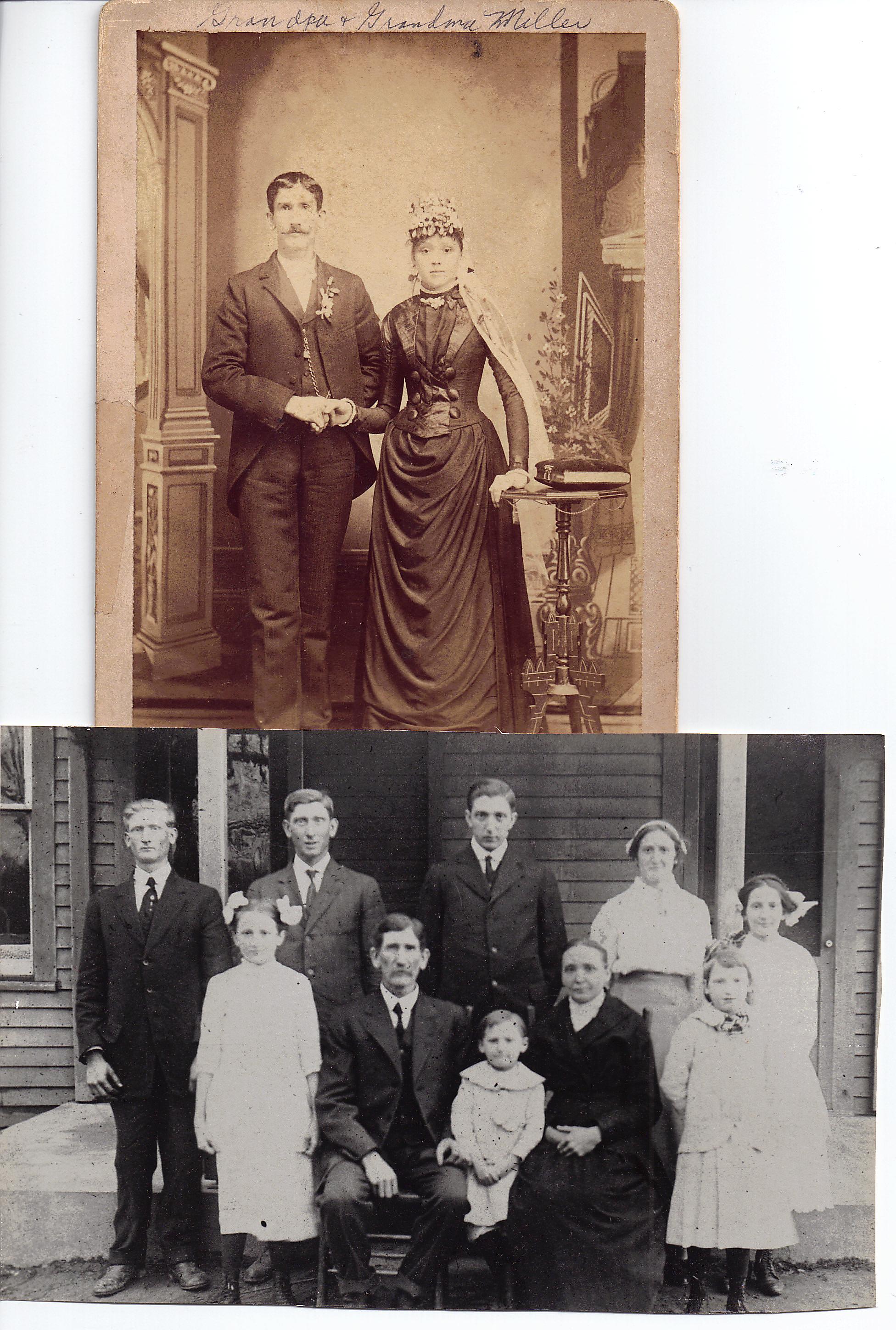
On Sunday, May 21st, 1911, the photographer would be coming through town. They had signed up at church the month before to schedule for the rare visit. It was an expensive venture to be sure with an average pay of $12 per week, it had to be budgeted for or come from money set aside for such an extravagance. The boys were already going off on their own, so this might well be the last time they take a family portrait. Mr. Miller decided it would be worth the expense.

Mrs. Miller had worked for hours the night before brushing the suits and pressing the collars. She had sore hands from the starch and hot iron pressing the day before, but the family would look their best in what they had on this day. The boys were wearing a few hand-me-down suits of their father’s but she had tailored them to fit well. Her oldest boy, wearing his first catalog ordered suit, would be leaving to work on the railroad and the next oldest would also be leaving to take his brother to the station and then look for a job in Evansville.

Linus had never been away from home to work or travel alone. His mother worried for his safety, but she knew he was excited to go. Her youngest son was only three and was fighting a terrible cold and had always been sickly. She feared he might be coming down with scarlet fever. It had been making rounds in the county and it had taken a few children to heaven over the spring.

Mr. Miller stood on the porch, checked his pocket watch, and looked up from it in time to see a motorized vehicle coming up the long dirt road toward his two story saltbox house. He called the children out onto the porch and the boys brought chairs for their parents. They were all excited to see the stranger and none of them but Mr. Miller had ever seen an automobile up close.

Minor Photography Company was painted white across the side of the panel on the Model T Ford bouncing and swaying up the dirt road. As he applied the hand brake and skidded to a halt, noises of clanks and spilling boxes came from the back seat of his contraption. All the children, including the grown men ran out to inspect the black metal hulk parked next to an old horse hitch.

“Hello friends. Are you ready to take your place in history?” There was little to unpack compared to the old tin type box cameras. This camera was hand held with a handle on the box. It was flat and had an ocular on the top and a flat large lense in the front. He called it “a brownie.” He instructed the family as he pointed where to sit how they were to freeze completely until he told them to move so the photo would not be blurred. He pointed at his head as a place to look and told them not to smile as to show any teeth and the children must be kept as still as possible or it would ruin the picture quality. He made a great fuss about it until Mr. Miller asked him to proceed, passing two coins over to the man to motivate the end to his speech.

As Mr. Miller sat surrounded by his large family, he thought of the first picture standing next to his wife who was so innocent and lovely eighteen years prior. She had agreed to marry him after a year of courting and he counted himself lucky as she had been a loyal and uncomplaining wife. Still smelling his collar pressed with Fels-Naptha, he caught the familiar scent of her lilac oil worn on their wedding day and every day since.

Leave a comment

Filed under Uncategorized

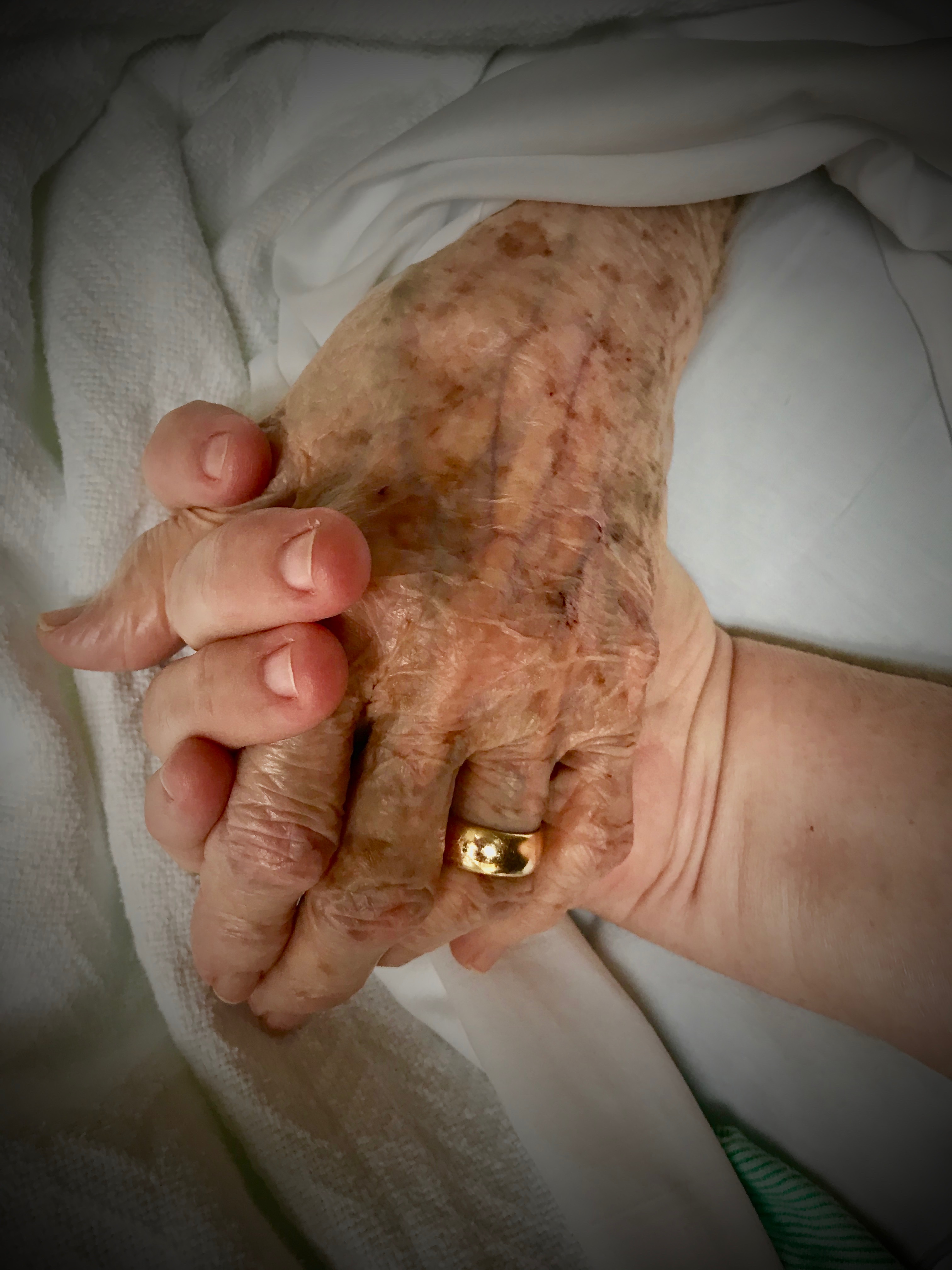
My mom did not die from COVID-19

The last time my mother was oriented enough to speak to me, she simply said “love you”. That was by telephone about a month before she died. I had not seen her for two months due to COVID-19 restrictions at her assisted living facility. We were not informed, until after we called and she did not answer her phone, that she had been moved to the COVID-19 isolation unit. The last time my daughter talked to mom, she was more lucid and said that she was “a prisoner in this awful place” and “get me out of here”. There is nothing more heart wrenching than knowing someone you love and to whom you spoke to almost daily now felt alone and imprisoned.

Unfortunately, because mom had a positive Covid 19 test, she was in isolation inside the assisted living facility, and was even not allowed to speak to us by phone because the facility did not have a phone that would get reception in that area of the old building. One nurse was misinformed and denied contact by phone because he said, “it is policy due to COVID”. Wrong, wrong, wrong. They had no manager, no head nurse, and the corporate manager was unreachable. It took me 6 days to get a corporate head to call me back after leaving a message threatening a lawsuit. I managed to get through to mom after one week by taking my own cell phone in and passing it to an aide who held the phone for her to speak to us outside on another cell. It was a short and confused few words as she was by then so very weak and not eating.

There has to be a better way. The communication and understanding of the CDC guidelines and the facility policies were not carried out by the agency staff covering the understaffed assisted living facility. Long before the shut down of this facility for safety reasons during COVID, mom had started to complain of bad food, poor staffing, no response to her emergency call light, and things that were broken or not working in the facility. Before the shut-down, family members were going in to clean up things in her room because they had been without a housekeeper for a year and nurse aides were trying to keep up with resident care and facility cleaning. It was a disaster but there were no affordable local options for our mother because she had too much money to be on medicaid and too little to afford long term costs of 80,000 dollars or more per year at a better facility. It would not have mattered if we had wanted to get her out during COVID because no one was allowing transfers between facilities with active cases.

Long term health costs are ridiculous, and the staffing is still as low as the state standards allow so more profits are pocketed by the facility corporate owners. I know this not only as a resident family member but as a retired nurse with 16 years in long term care. We were always understaffed and overworked. Added problems were that most doctors did not want to do much care of residents in LTC because it paid them nothing extra for visits to the facilities. Facility physicians and nurse practitioners are not generally the cream of the crop because specialists and really good GP’s are working at bigger hospitals or practices where they make more money. Hey, they have bills to pay, so I get it. However, our elders are generally getting less aggressive medical attention because “they are old”. At least, this was my experience. So, even if the family dearly loves the resident, if they cannot get good medical care, and cannot get out of the facility, they are stuck with having nurses call and get orders from a provider who possibly laid eyes on the patient three times a year for five minutes, and is assuming from the little bits of info from nursing how to treat their symptoms.

In the eyes of COVID 19 statistics, my mother became a number on the list dead from COVID two weeks after her admission into a Hospice facility. She went from the long term care facility to the ER by our demand because she fell. If not for that we never could have broken her out of that facility because she had COVID and was still in quarantine. More than once she was denied her basic civil rights, dignity, and pursuit of happiness by contact with her family. She didn’t really die of COVID she died because she was weak and gave up. Even at Hospice I had to go to bat to argue for early visits before she entered transition to death (24 hours before). They had stopped all visitation there due to our community increase of COVID outbreaks. She had stable but chronic kidney disease for several years, but her kidneys were quickly shutting down from damage of COVID. She tested negative before our first bedside visit. It was one week before her death that we were able to begin sitting at bedside. However, she had already stopped eating, stopped responding, didn’t open her eyes, and did not have any hand grip response (like a newborn would). She was literally gone in spirit and in body already.

How is this lack of care in a facility possible? Assisted living facilities that are private pay and not relying on medicare and medicaid for medical care payments are not under the same scrutiny as skilled facilities. While they are still supposed to meet the same standards of basic care by state law, I am here to attest that there is less active accountability. I know, I worked both. My mother, who spent her whole life loving and caring for others with no regard for herself was on the bitter end of life trapped in one of these facilities, not having been able to give her family one last hug while still able.

If not for the Hospice in-patient care facility (which was expensive and not covered by any insurance – including Medicare) we would not have even been able to be next to her before death. Quietly, in sleep she passed. Her death was marked as COVID because she had a positive. I also learned that facilities do receive more assistance from the state and federal government for listed COVID related deaths. Also, there is much confusion about cause of death documentation. If recovered with a negative test, and patient chronic illness has been complicated by the viral illness that results in death, is the death from the chronic illness (in this case kidney failure), or from the COVID virus ushering a faster death? No one had a straight answer for me. It’s easier to label it as COVID and allow facilities the extra monies they want.

Countless families in the US and their elderly loved ones have suffered this kind of end during the last 8 months. Some are getting good care, some are being sacrificed due to lack of affordable care, or due to the need of younger patients who have a better chance at survival. (War time triage strategy.) It is a shame for such a rich country that our values have become so skewed. Even dogs have rescue organizations to care for unwanted pets, why would we treat humans with any less dignity than our pets? Yet we have fewer organizations rallying behind elderly unwanted than dogs and cats. I don’t understand.

According to the New York Times, 38 % of all U.S. COVID deaths were attributed to nursing homes. Those numbers have continued to rise since that month in June 2020. I can attest that I saw nursing giving care between patients without changing gloves or washing hands before Covid restrictions stopped my visits, so I can only assume not much changed as the rate of infection in my mother’s facility kept increasing every few weeks after patients were sequestered in their private rooms for a month.

As infection rates continue to show variable increases across the states, our elderly continue to be the most vulnerable population for contraction of every communicable virus. Although some politicians and younger people consider this population an acceptable loss in the grand scheme of population losses to COVID, I consider my mother’s loss a tragedy and one I will not soon overcome.

On the other side of the care system as a family member, I have never felt so helpless and infuriated than in facing the way my mother’s last month of life unfolded. No one person had answers and even contacting five or six resulted in different information. Unknowns I get, but the plans of handling care of the elderly and their families did not have any real guidance for much of the COVID summer of 2020. For the lack of a better description of the state, federal, and local response and coordination, and excuse my vulgarity, but it has been a clusterfuck for families losing someone during COVID.

From this year of tragedy, at the very least, I pray to God that our society will take a hard look at the way we care for the elderly in the United States because of this pandemic microscope. There has to be a better way than our current long term care system.

Image copyright SGTraylor 2020

Leave a comment

Filed under Uncategorized

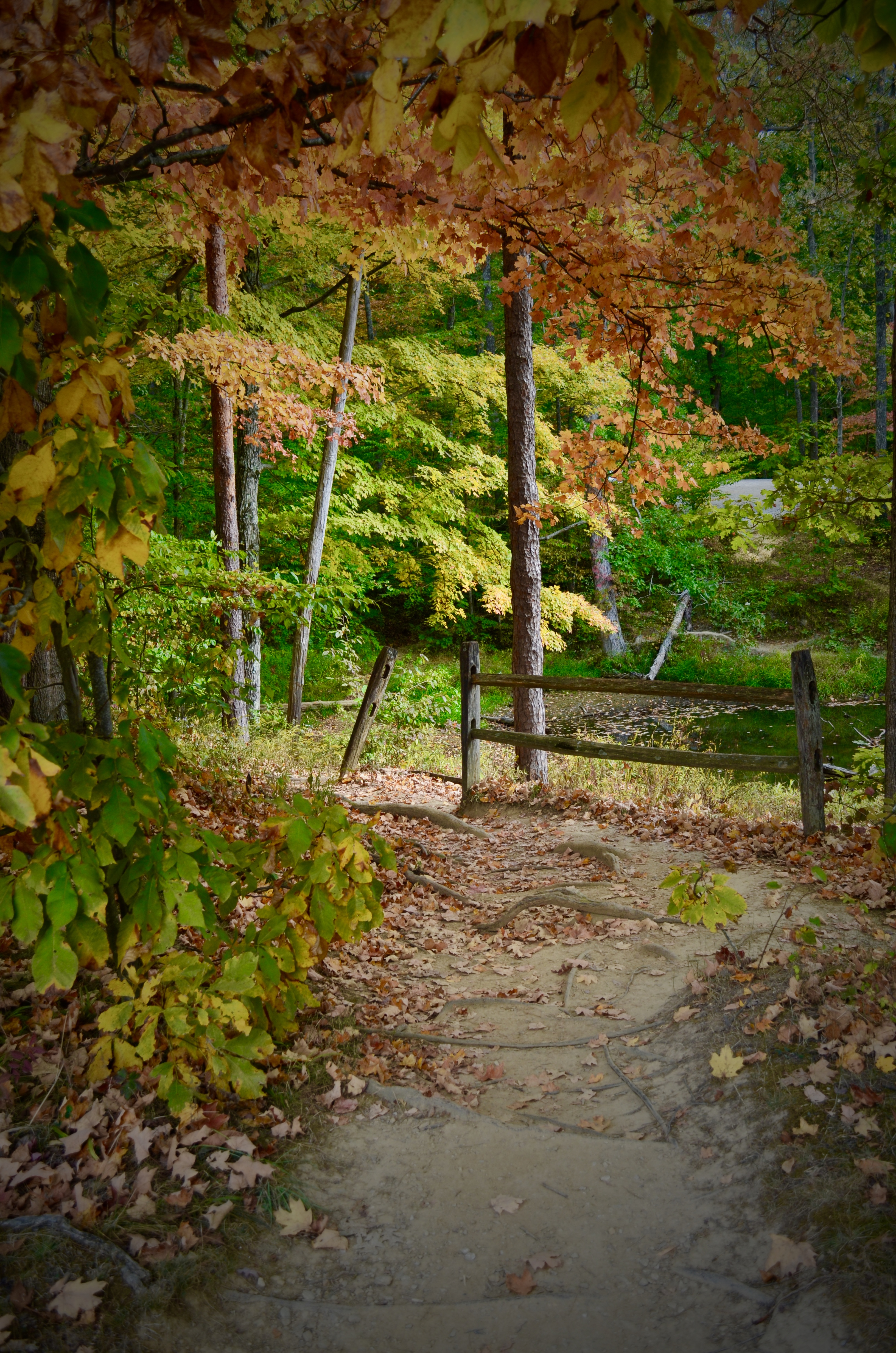
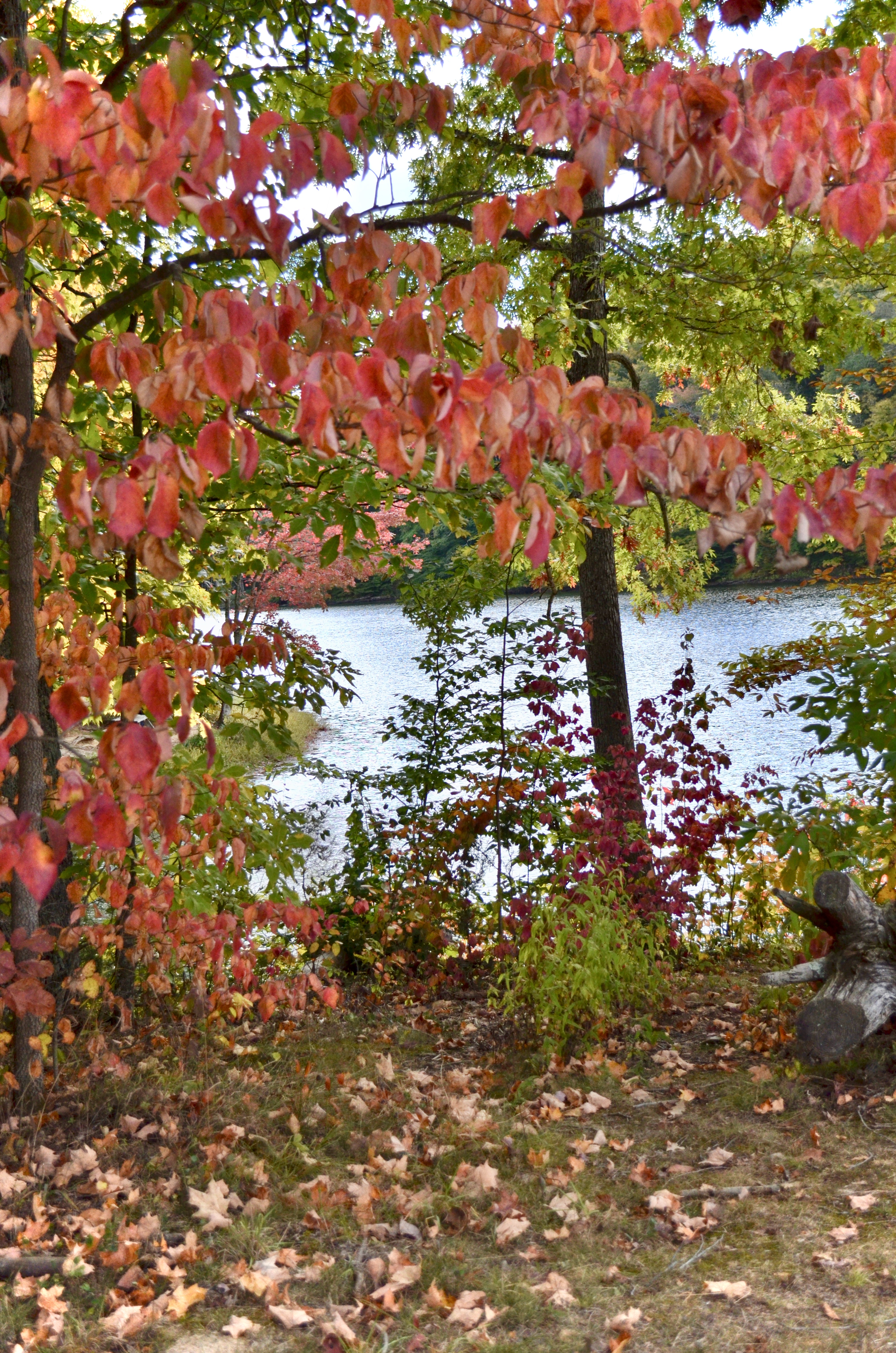
Photos from Brown County

Leave a comment

Filed under Uncategorized

Sometimes I hear beauty

Looking around Brown County with a friend, the sky was clear and bright blue, the clouds looked like cotton balls, and bright colors and great weather was all around.

I look down and the water is muddy, some trash was floating from some previous fishermen. Then I watched as the wind blew the water into uneven swirls and all the leaves now falling were spinning and finding their fall in the beginning of a journey. The drying leaves, colors bright yellow and red, dunking deep then bouncing back up to the top of the water for a ride with waves against the muddy shore. Slowly, the water rested as it reached the edge of the grassy bank below my feet. Lap-plop, lap-plop, lap lap-plop. Moving a force of fallen yellows and reds, four leaves found each other in a slowing spin, dancing around as though attached in current force to one another. As their spin slowed to a paired waltz, their colors seemed to reflect a last burst of life and love, but a sense of a day in repast.

The beauty found me there, I took my picture, I closed my eyes, and heard the wind, and felt my breath. I saw the pairs float on down along the bank, still posing like a grand promenade onto the next port. A witness to beauty and perfect purpose in cycle, a dragonfly perched upon the two for a ride and stayed for a while. I closed my eyes and could still see the bright sun in the bouncing rays off the lake. I could still hear the wind, the buzzing of insects in living, leaves falling, and distant birds singing about their day.

Leave a comment

Filed under Inspiration, Photographs and Art