Category Archives: Uncategorized

Advice to Young Writers

“You cannot hope to sweep someone else away by the force of your writing until it has been done to you.” Stephen King from On Writing

When students ask me for advice about writing for a living, I begin by asking them a question. “Do you write every day, even if you don’t have to?”

If the student responds yes, then I tell them, you are already a writer. No matter what I tell you, if you have a passion to write, you should try to improve your skills in every way possible and keep writing.

To be a good writer, you should practice all types of writing. This means excelling in writing for school and for enjoyment. Writing is not easy if you are doing it for a living. Like anything else at a professional level, it is hard work. But it does have it’s rewards if you love what you do. If you are disciplined enough to try and improve in writing you don’t necessarily enjoy, then you have the endurance to do even better at writing something you enjoy.

In order to write well, you should read just as much. In his book, On Writing, Stephen King states, “If you want to be a writer, you must do two things above all others: read a lot and write a lot. There’s no way around these two things that I’m aware of, no shortcut.” By reading a lot of classic books, the writer begins to see how plots are written differently. Elements such as setting, character, conflict, and themes emerge and help the reader understand the importance of incorporating the best samples of those elements in their writing style. These are lessons learned from middle school through college.

The next question I ask of a writing student who likes to write is: “Do you write because you want to be a famous writer someday?”

Many will respond, “yes”. It makes me wince because I once felt the same way. As I aged, I realized that less than one percent of writers make money writing books, and less than that actually achieve recognizable fame publishing books. Most will share that going through today’s publishing world has a lot of frustrations. I try to encourage the young writer by encouraging smaller more achievable goals that can increase their skills, experience a few setbacks, and pay some bills. There are many professions that give a great deal of experiences that can be used to create fascinating stories. While those skills are growing, I give the following advice about a career path in writing.

  1. Read as much as you write.
  2. Emulate styles of writing and genres you enjoy.
  3. Join writing groups outside of school.
  4. Join academic writing groups (journalism, newspaper, yearbook).
  5. Go to college and major in something that helps you manage your career (business, computer & graphic design, publishing, or contract law).
  6. Investigate professions that depend on good writers and aim for those.

I have told the student to read more, write more, and practice. The last basic advice next to practice all forms of writing is to write what makes you happy, and practice it daily. Practice how to cut, edit, rework, read, and rewrite your stuff again and again. Use criticism from others as a challenge to improve. If a piece of work still doesn’t seem right, put it in a drawer for a few days or weeks and write something else for a while. When your brain is ready to look at it again, start at the beginning and read it through without stopping. Mark spots you want to revisit, but do not make any notes that will stop the reading process. Never throw it away, but don’t be scared to shove it in a drawer. I have stories filed away I may never publish, but revisit once in a while that spawn other ideas for stories. Not everything you write is gold. In fact, you will write a lot of garbage if you write often. However, begin able to recognize and appreciate your garbage takes time. Writing well and analyzing texts are important skills for most practiced professions.

Most of the famous writers today are doctors, lawyers, politicians, teachers, or other financially secure professionals. Their education helps them meet people who can help their writing careers advance, and gives them a firm financial ability to fund some of their writing aspirations. Limiting your career to sitting and writing does not give you much life experience to write about. Traveling, meeting a lot of interesting people, and communicating with others who have had exciting experiences are invaluable to a writer’s notebook of ideas for writing.

There is no limit of written dreams on shelves from authors who never “made it”, and I try to explain to students of writing that it is a hard road if you write entirely to become famous. Instead, write because you like doing it. If you get paid for writing, that is just a happy bonus. There are always more words to write, but know when it’s time to say the end–until tomorrow.

Leave a comment

Filed under Inspiration, On Writing, Uncategorized

Photography Day October 2020

Leave a comment

Filed under Uncategorized

Captured in Time

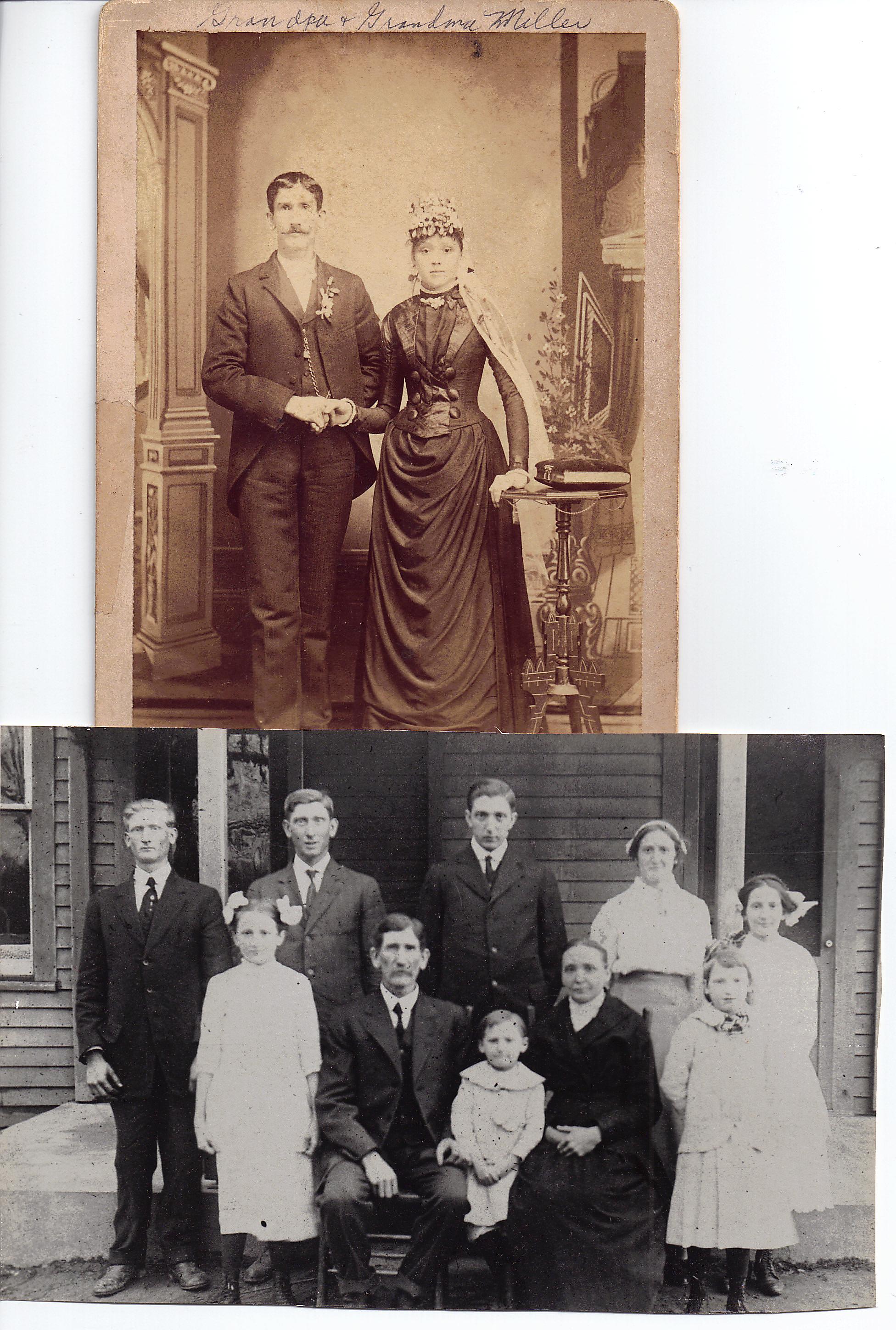
On Sunday, May 21st, 1911, the photographer would be coming through town. They had signed up at church the month before to schedule for the rare visit. It was an expensive venture to be sure with an average pay of $12 per week, it had to be budgeted for or come from money set aside for such an extravagance. The boys were already going off on their own, so this might well be the last time they take a family portrait. Mr. Miller decided it would be worth the expense.

Mrs. Miller had worked for hours the night before brushing the suits and pressing the collars. She had sore hands from the starch and hot iron pressing the day before, but the family would look their best in what they had on this day. The boys were wearing a few hand-me-down suits of their father’s but she had tailored them to fit well. Her oldest boy, wearing his first catalog ordered suit, would be leaving to work on the railroad and the next oldest would also be leaving to take his brother to the station and then look for a job in Evansville.

Linus had never been away from home to work or travel alone. His mother worried for his safety, but she knew he was excited to go. Her youngest son was only three and was fighting a terrible cold and had always been sickly. She feared he might be coming down with scarlet fever. It had been making rounds in the county and it had taken a few children to heaven over the spring.

Mr. Miller stood on the porch, checked his pocket watch, and looked up from it in time to see a motorized vehicle coming up the long dirt road toward his two story saltbox house. He called the children out onto the porch and the boys brought chairs for their parents. They were all excited to see the stranger and none of them but Mr. Miller had ever seen an automobile up close.

Minor Photography Company was painted white across the side of the panel on the Model T Ford bouncing and swaying up the dirt road. As he applied the hand brake and skidded to a halt, noises of clanks and spilling boxes came from the back seat of his contraption. All the children, including the grown men ran out to inspect the black metal hulk parked next to an old horse hitch.

“Hello friends. Are you ready to take your place in history?” There was little to unpack compared to the old tin type box cameras. This camera was hand held with a handle on the box. It was flat and had an ocular on the top and a flat large lense in the front. He called it “a brownie.” He instructed the family as he pointed where to sit how they were to freeze completely until he told them to move so the photo would not be blurred. He pointed at his head as a place to look and told them not to smile as to show any teeth and the children must be kept as still as possible or it would ruin the picture quality. He made a great fuss about it until Mr. Miller asked him to proceed, passing two coins over to the man to motivate the end to his speech.

As Mr. Miller sat surrounded by his large family, he thought of the first picture standing next to his wife who was so innocent and lovely eighteen years prior. She had agreed to marry him after a year of courting and he counted himself lucky as she had been a loyal and uncomplaining wife. Still smelling his collar pressed with Fels-Naptha, he caught the familiar scent of her lilac oil worn on their wedding day and every day since.

Leave a comment

Filed under Uncategorized

My mom did not die from COVID-19

The last time my mother was oriented enough to speak to me, she simply said “love you”. That was by telephone about a month before she died. I had not seen her for two months due to COVID-19 restrictions at her assisted living facility. We were not informed, until after we called and she did not answer her phone, that she had been moved to the COVID-19 isolation unit. The last time my daughter talked to mom, she was more lucid and said that she was “a prisoner in this awful place” and “get me out of here”. There is nothing more heart wrenching than knowing someone you love and to whom you spoke to almost daily now felt alone and imprisoned.

Unfortunately, because mom had a positive Covid 19 test, she was in isolation inside the assisted living facility, and was even not allowed to speak to us by phone because the facility did not have a phone that would get reception in that area of the old building. One nurse was misinformed and denied contact by phone because he said, “it is policy due to COVID”. Wrong, wrong, wrong. They had no manager, no head nurse, and the corporate manager was unreachable. It took me 6 days to get a corporate head to call me back after leaving a message threatening a lawsuit. I managed to get through to mom after one week by taking my own cell phone in and passing it to an aide who held the phone for her to speak to us outside on another cell. It was a short and confused few words as she was by then so very weak and not eating.

There has to be a better way. The communication and understanding of the CDC guidelines and the facility policies were not carried out by the agency staff covering the understaffed assisted living facility. Long before the shut down of this facility for safety reasons during COVID, mom had started to complain of bad food, poor staffing, no response to her emergency call light, and things that were broken or not working in the facility. Before the shut-down, family members were going in to clean up things in her room because they had been without a housekeeper for a year and nurse aides were trying to keep up with resident care and facility cleaning. It was a disaster but there were no affordable local options for our mother because she had too much money to be on medicaid and too little to afford long term costs of 80,000 dollars or more per year at a better facility. It would not have mattered if we had wanted to get her out during COVID because no one was allowing transfers between facilities with active cases.

Long term health costs are ridiculous, and the staffing is still as low as the state standards allow so more profits are pocketed by the facility corporate owners. I know this not only as a resident family member but as a retired nurse with 16 years in long term care. We were always understaffed and overworked. Added problems were that most doctors did not want to do much care of residents in LTC because it paid them nothing extra for visits to the facilities. Facility physicians and nurse practitioners are not generally the cream of the crop because specialists and really good GP’s are working at bigger hospitals or practices where they make more money. Hey, they have bills to pay, so I get it. However, our elders are generally getting less aggressive medical attention because “they are old”. At least, this was my experience. So, even if the family dearly loves the resident, if they cannot get good medical care, and cannot get out of the facility, they are stuck with having nurses call and get orders from a provider who possibly laid eyes on the patient three times a year for five minutes, and is assuming from the little bits of info from nursing how to treat their symptoms.

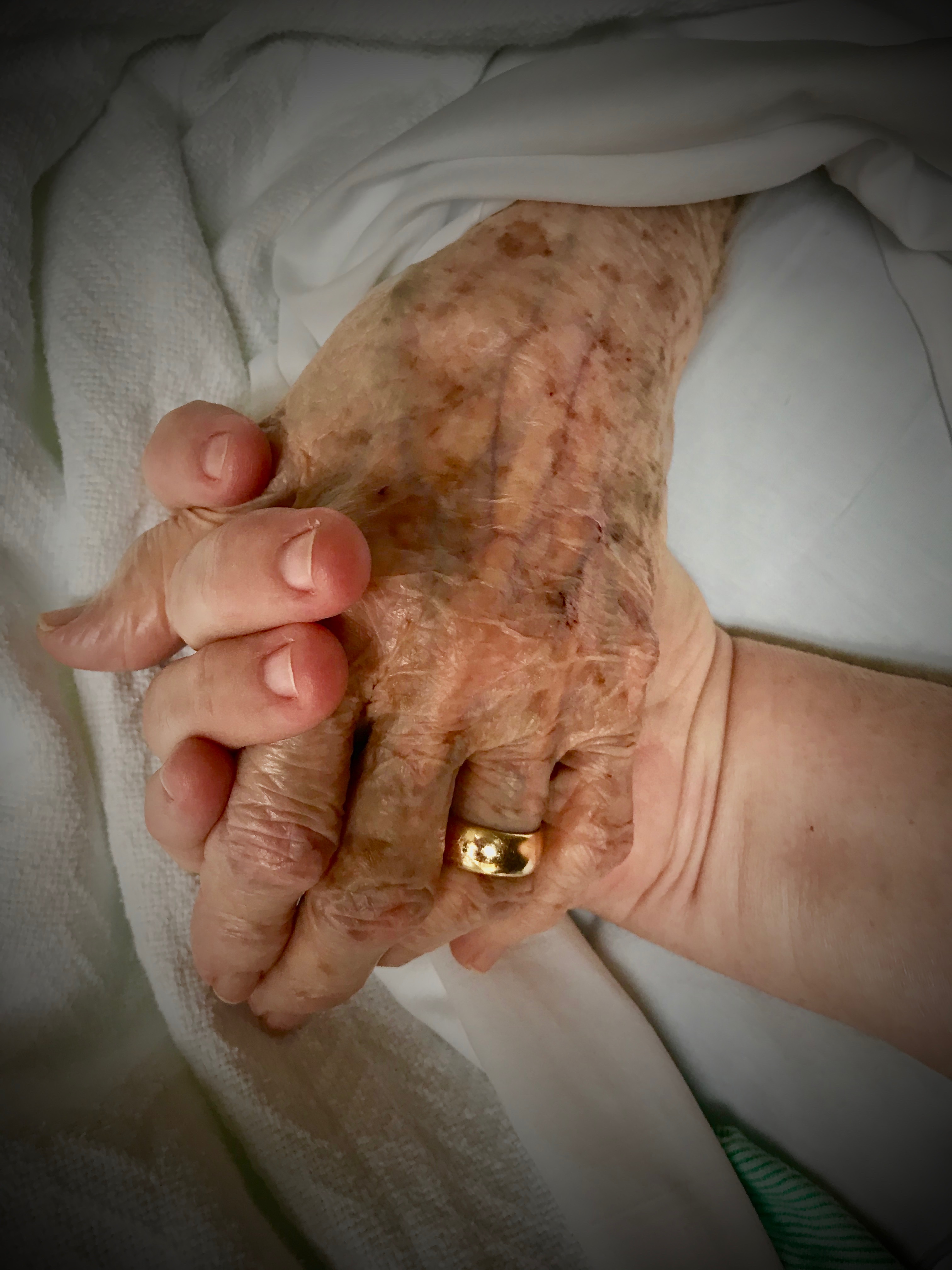
In the eyes of COVID 19 statistics, my mother became a number on the list dead from COVID two weeks after her admission into a Hospice facility. She went from the long term care facility to the ER by our demand because she fell. If not for that we never could have broken her out of that facility because she had COVID and was still in quarantine. More than once she was denied her basic civil rights, dignity, and pursuit of happiness by contact with her family. She didn’t really die of COVID she died because she was weak and gave up. Even at Hospice I had to go to bat to argue for early visits before she entered transition to death (24 hours before). They had stopped all visitation there due to our community increase of COVID outbreaks. She had stable but chronic kidney disease for several years, but her kidneys were quickly shutting down from damage of COVID. She tested negative before our first bedside visit. It was one week before her death that we were able to begin sitting at bedside. However, she had already stopped eating, stopped responding, didn’t open her eyes, and did not have any hand grip response (like a newborn would). She was literally gone in spirit and in body already.

How is this lack of care in a facility possible? Assisted living facilities that are private pay and not relying on medicare and medicaid for medical care payments are not under the same scrutiny as skilled facilities. While they are still supposed to meet the same standards of basic care by state law, I am here to attest that there is less active accountability. I know, I worked both. My mother, who spent her whole life loving and caring for others with no regard for herself was on the bitter end of life trapped in one of these facilities, not having been able to give her family one last hug while still able.

If not for the Hospice in-patient care facility (which was expensive and not covered by any insurance – including Medicare) we would not have even been able to be next to her before death. Quietly, in sleep she passed. Her death was marked as COVID because she had a positive. I also learned that facilities do receive more assistance from the state and federal government for listed COVID related deaths. Also, there is much confusion about cause of death documentation. If recovered with a negative test, and patient chronic illness has been complicated by the viral illness that results in death, is the death from the chronic illness (in this case kidney failure), or from the COVID virus ushering a faster death? No one had a straight answer for me. It’s easier to label it as COVID and allow facilities the extra monies they want.

Countless families in the US and their elderly loved ones have suffered this kind of end during the last 8 months. Some are getting good care, some are being sacrificed due to lack of affordable care, or due to the need of younger patients who have a better chance at survival. (War time triage strategy.) It is a shame for such a rich country that our values have become so skewed. Even dogs have rescue organizations to care for unwanted pets, why would we treat humans with any less dignity than our pets? Yet we have fewer organizations rallying behind elderly unwanted than dogs and cats. I don’t understand.

According to the New York Times, 38 % of all U.S. COVID deaths were attributed to nursing homes. Those numbers have continued to rise since that month in June 2020. I can attest that I saw nursing giving care between patients without changing gloves or washing hands before Covid restrictions stopped my visits, so I can only assume not much changed as the rate of infection in my mother’s facility kept increasing every few weeks after patients were sequestered in their private rooms for a month.

As infection rates continue to show variable increases across the states, our elderly continue to be the most vulnerable population for contraction of every communicable virus. Although some politicians and younger people consider this population an acceptable loss in the grand scheme of population losses to COVID, I consider my mother’s loss a tragedy and one I will not soon overcome.

On the other side of the care system as a family member, I have never felt so helpless and infuriated than in facing the way my mother’s last month of life unfolded. No one person had answers and even contacting five or six resulted in different information. Unknowns I get, but the plans of handling care of the elderly and their families did not have any real guidance for much of the COVID summer of 2020. For the lack of a better description of the state, federal, and local response and coordination, and excuse my vulgarity, but it has been a clusterfuck for families losing someone during COVID.

From this year of tragedy, at the very least, I pray to God that our society will take a hard look at the way we care for the elderly in the United States because of this pandemic microscope. There has to be a better way than our current long term care system.

Image copyright SGTraylor 2020

Leave a comment

Filed under Uncategorized

Photos from Brown County

Leave a comment

Filed under Uncategorized

She was a prisoner on the inside and we were prisoners on the outside.

I want to talk about my mother by writing a book. I lost her recently and my way to deal with pain is to write. She was 94 and mortal, so I didn’t expect her to live forever. There is never enough time to do all the things or say all of the things you want to and death seems to focus that reality. Regret, guilt, anger, longing, only some of the feelings to bear with grief. But to write a book about it in a way that helps others channels the emotions into a positive light.

I write for many reasons. In this time of grief, I also want to help others. My mother was in a nursing home and during that time she contracted COVID-19 from a worker. It was difficult enough that they closed the facility to protect the residents two months prior, but then they actually carried it in to her and passed it through a lack of attention to infectious disease protocol. So, I had to start making notes to myself to decide what the purpose will be in writing this book.

I always begin with the same three questions:

Am I writing to entertain?

Am I writing to inspire?

Am I writing to educate?

If the purpose of my writing is an emotional or cathartic release, then it is a diary and is not likely to help or inspire others as much as to help me cope. Although a book can serve all three of the purposes listed, one usually stands out as the primary purpose. In my case, I feel that I need to educate by offering a map of transition from home to nursing home and help others understand what happens after those decisions are made. The next questions I ask relate to the expected outcome. I ask myself the following:

What outcome do I hope for the finished product and who might this book serve?

Is this book going to instruct someone on how to navigate a similar circumstance or problem?

Is this a platform for change?

Once I have answered all of these questions, I am able to identify the type of book I want to write. The next question is imperative to understanding my mindset at the time of the writing.

What essential question do I want answered or what is my strongest desire to fulfill in writing this book?

In order to really stay focused on writing, I have to be passionate about the cause or the purpose for writing. I try to stay on track and not go off on wild tangents that are fueled by anger or regret in a story, but ultimately it happens. That is why I edit later and do a lot of rewrites. But getting as much down as fast as possible is typically how I roll once my basic outline is set up and beside my computer.

I was a nurse for 30 years and have 15 of those in long term care. I understand the system from both sides. I understand the nurses mindset and how they cope with low staffing and not enough time in the day to do all that has to be done. I understand the endless charting to cover your butt from lawsuits and the state and federal laws related to long term care facilities. I was an administrative nurse acting as a DON at an assisted living facility for two years and met with state reviewers during annual reviews. As a family member with medical training, I witnessed poor care, substandard PPE use and lack of professionalism during care of my mother when I was visiting. I understand the feeling from the point of view of a family member with no control and limited information of how my mother was treated day to day. in my absence. I visited, helped with what I could, and walked away hoping they would care for her but knew it would not be with the same detailed care I could give.

That is how I begin. I am beginning a book about my mother. I will probably write two. One will be to help others to navigate the maze of long term health care for the aging, and the other will be about who mom was before she was seen as an old lady. Understanding the difference in these books and separating the two by purpose is important so the audience is not trying to navigate an unclear trip through a grieving brain of a motherless daughter.

Leave a comment

Filed under Aging, Inspiration, On Writing, Uncategorized

Buttons

Today I was sewing mask ear savers for nurse friends who wear masks in this era of the Covid-19 virus. A friend donated a bag of buttons to me to use. I dumped the bag and started sorting. It rushed me back to my childhood.

My mother and grandmother both made their own clothes, and over the years I had pajamas, suits, Easter dresses, and even my prom and wedding dress sewn by my mother. Buttons in boxes and jars were all over the my grandmother’s house. She had a tin box filled with old buttons from the 1930s, 40s, 50s, and they made a delightful noise when the box was shaken. When I visited, I dumped them out on the kitchen table and sorted, stacked, and made button necklaces with thread. Hours and hours of fun because her buttons were strange. They were glass, crystal, jeweled, metal, painted, plastic, wood, and some were just huge. I would ask her often what each one was from. Most of the time, she answered exactly what she cut it off of or if it was from customer alterations, or gifted. She used to starch shirts and do alterations for money as well as making clothes. Sometimes people just gave her buttons if they had them lying around since she did alterations and replaced buttons for people on coats and shirts.

I sat at the table, or on her wood floor, separating buttons by color, size, or category in my head. They were not just connectors for clothes, they were a living thing to me. They told me a story. Fancy dress buttons were worn by ladies going to a ball and dressed in satin, lace, and button up gloves. The gentleman behind the brass button in the box lost the button from his jacket when he was getting up to pull a chair out for the lady. My imagination always led me to connect things with people who held them once.

Now as I sit and sort, I smile at the memories of a seven year old self on the floor with a pile of unwanted buttons.


1 Comment

Filed under The Past, Uncategorized

Editors, Proofreaders and Ghostwriters

There are distinct differences between editors, proofreaders, and a ghostwriters. There are different types of editors and ghostwriters, dependent upon their employment. If they are contracted at a professional journal, newspaper or publishing house, they are often paid more and have more limitations than a freelance professional. Proofreaders review work for grammar, punctuation, and simple formatting or spacing errors. Ghostwriters are paid to produce work and not take the credit for writing. Copy editors review the entire work and offer contextual direction and advise on revisions.

Early in my career, I contracted with a client who hired me as a copy editor for her intended self-published book. She was developing a coffee table book about her pet. She had beautiful photographs and a basic text already laid out. I partnered with a layout editor and we packaged a deal with this client to help her develop the work into a finished book ready to publish. Over the course of the next few weeks meetings, she was disappointed with me as an editor and states she didn’t know why she needed me because I didn’t “fix” anything for her but made her do it. Needless to say, she did not understand my role in her work and I should have outlined the roles of the copy editor and layout editor much more clearly. She wanted someone to reword, correct all contextual errors, and do the revisions, or as she described, “say what I really mean.What she really wanted was a ghostwriter.

When hiring a professional ghost writer, be prepared for several interviews in person, by phone or email with the writer, and expect that person may have to view pictures or personal information in order to create a finished work. Also know that they will not be able to duplicate your voice on paper and may not “sound” like you. This is part of the cost for hiring someone to tell your story. Your are hiring their professionalism and writing skills to share your personal story, but they will not likely be able to produce your personality on paper. If you can write the story but need help with the organization of it, that would involve a copy editor.

As a copy editor, my job was to analyze the work, suggest revision of language and organization, advise on errors in syntax, context or style, and offer direction on how the author can improve the text, design and presentation of the work in total. She often received responses by email from me stating something like, “consider revising this section to reflect a description of your witnessing this act and how it effected you personally.”  I also pointed out any grammar, punctuation, or mispelling errors [without correcting] that a proofreader might do. She sent her work in pieces over a few weeks, then she inserted text into the photography and we reviewed the layout format and design as a group.

The layout editor did the design and formatting of the photographs with the text and delivered the work in PDF format ready for publishing. This editor also set up the physical publishing of the book with the printer. Her paid bill to us was around $800, which was substantially less than a professional copy editor and layout editor charge at a  professional print on demand publishing house. Her cost to print books was going to be several thousand dollars for the high quality color gloss pages she desired. In the end, the client backed out of publishing when she found out the cost of print was over and above the cost of our contract, even though clearly spelled out to her in our first meeting. It was a misunderstanding of the roles and services covered in the contract. Although discussed in a meeting, these roles were not defined clearly enough in the service contract.

When hiring one of these professionals, ask them about the scope of their role in your work. If they do not answer appropriately, or cannot define one of these roles, do not hire them. Investigate the professional you hire, ask for and check references, and pay no more than half up front, and the other half on completion of the service. Make smart decisions about your work and do not sign a contract with any editing service if roles and responsibilities are not clearly defined.

Leave a comment

Filed under Uncategorized

Writing Practice

Every day that you write in your journal, comment on someone’s work, or post on Facebook, you are practicing the art of writing. But what are you practicing? Are you developing reasonably intellectual arguments or comments, or describing a picture of a cat as cute and fluffy?

The practice of creative writing requires some dedication to consistency. Like any talent, if you do not practice regularly, your work will not be as sharp and lack focus. This does not mean that a practiced writer will not make mistakes. On the contrary, I edit my work several times before allowing it to leave my possession.

I recently offered a first draft to a colleague who agreed to review my work for content. I know she will end up doing line by line editing because she was an instructor for so many years.  I write daily, but I found four mistakes of syntax and punctuation on page one of my draft after viewing the printed copy. I should have reviewed the work more closely before showing it to my mentor.

Printing out your work and reviewing it offers a different perspective from seeing it on line or on the computer screen. Perspective in writing can be expanded by trying on different genres and styles of writing. Switching from fiction to non-fiction, from journalistic style to fan-fiction, or from business format to poetry can give any writer a creative boost.

Creativity and inspiration is important in the practice and production of good writing. Look for inspiration anyplace you spend time. If that is on line, in a library, or sitting at a concert with friends, then find your motivation there. Practice writing every day and you may be signing your autograph for a fan inside the cover of your next book. You will not find success if you don’t try through applied practice.

Leave a comment

Filed under On Writing, Uncategorized

Why are you writing?

When I sit down to create a storyline, I begin by asking myself –Who is the story about and who am I writing it for?  Considering the audience never used to concern me as I wrote just for the enjoyment of sharing a story that floated around in my head. But as I have matured I am more concerned with the main ideas and reactions readers experience from reading the story. I am more concerned than ever before that my “message” or my theme is understood by the reader.  I take longer to write and play with the words in the story more than I did ten years ago.  I am coming up on eight years as a published author and I feel I have learned a lot about structure and style. What I am surprised by is how different my voice in writing has changed over the last decade. While I still write with humor, my structure is more formed and I show less loose ends. The stories have become less rushed and character development is much better than before.  I am still learning about writing techniques and have new challenges as an instructor of creative writing, but I get so much satisfaction out of sharing what I love that the challenges are enjoyable.  

As a writer, the first thing to understand is there is always someone out there better than you are at what you do.  Instead of fearing that, seek them out and learn from them so your skills can become sharper. I am attending the Midwest Writers Conference at Ball State in July so that I can continue to renew my skills and be in the presence of other writers around the country.  Hope to see you there!

Leave a comment

Filed under Uncategorized